11/13/2013 (12 Moons Solo Project Day 317)

12 Moons Solo Saxophone Project Day 317

Date: 11/13/2013

Instrument: Tenor saxophone

Location: Home studio in Clinton, WA (Whidbey Island)

Notes:

This improvisation explores a specific tonging technique while singing or growling into the horn.  During this piece my tongue stays away from the reed, never making contact with it.  Instead, the quick, percussive sound mounds are done by singing into the horn while moving my tongue with “o” and “e” vowel sounds in rapid succession.  This same vowel shape was explored in another 12 Moons improvisation early on in the project.

When done out loud without the saxophone and using the voice only, these vowel sounds create a very similar physical movement in my mouth as that I experience while playing with the actual horn.  About 1/3 down from the tip, the tongue rises to meet the roof my mouth.  This rise and fall, combined with the two distinct vowel sounds and my singing, create a variety of colors.  To explore this concept in a more controlled fashion, I chose a specific base fingering that allowed for more pliability of these sounds.  This base fingering also allowed these pitches to bend without easily chirping.  This fingering was as follows:

(Left Hand) 1-2-3, Low Bb, Palm D // (Right Hand) 1-2, Low C.  I also closed the D key in the right hand (3), opened the Side Bb, Side F# key, and switched the Palm D to the Palm Eb (this single palm key only).  However this was only momentary.  

-Neil

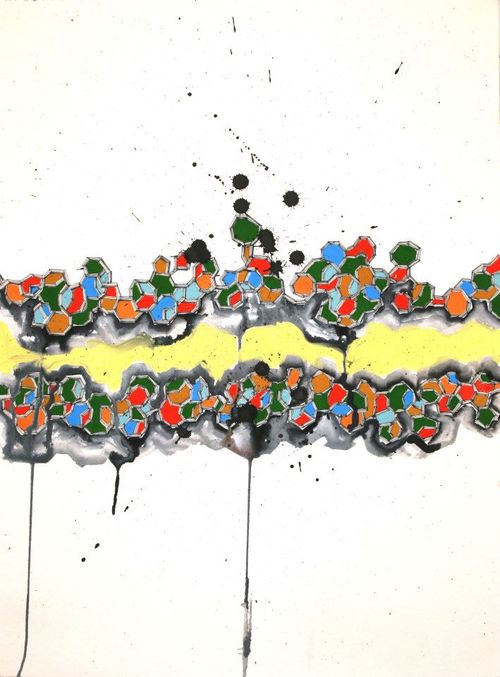
The image “Luminous City” accompanying today’s post by Mark Innerst.

11/12/2013 (12 Moons Solo Project Day 316)

image

12 Moons Solo Saxophone Project Day 316

Date: 11/12/2013

Instrument: Tenor saxophone

Location: The main performance hall at Chief Sealth High School.  Seattle, WA 

Notes:

This improvisation uses an Ab concert pitch center with microtones gravitating around it at various tempos.  I explored six specific fingerings and cyclic rhythmic patterns, allowing the slight differences in pitch to interact with one another.  In this piece I wanted to develop an expectation of the static Ab sound, and to let dynamic and rhythmic shaping give the improvisation more dimension.  Most of the rhythmic cycles were of a medium tempo, with the exception being moments of rapid execution.  

From the outset the room took these false fingerings and pulled out beautiful upper register overtones, adding an amazing amount of color to the overall sound.  In the mid point of the improvisation I began playing extremely quiet and dipped momentarily into the upper register Concert Ab and surrounding microtones.  After briefly returning back to the previously established mid octave Ab, I began abruptly using indeterminate double tongue pitch articulations.  I did this to break up the flow of constancy, but also to the let the room interact with the more puckish articulations.  I eventually settled on recurring double tonging shapes with the six fingerings to unify the broader sound-scape of constancy having been established at the beginning of the improvisation.

The six Ab fingerings, each with slightly different tuning are written below.  These were combined at-will.

(Left Hand) 1, Low Bb // (Right Hand) 1-2-3. Low C

(Left Hand) 1-2, Low Bb // (Right Hand) 1-2-3. Low C

(Left Hand) 1-2, Low Bb // (Right Hand) 1-2-3. Side Bb Low C

(Left Hand) 1-3, Low Bb // (Right Hand) 1-2-3, Low C

(Left Hand) 1-3, Low Bb // (Right Hand) 1-2-3, Side Bb, Low C

(Left Hand) 1-3, Low Bb // (Right Hand) 1-2-3, Side Bb, Low C

-Neil

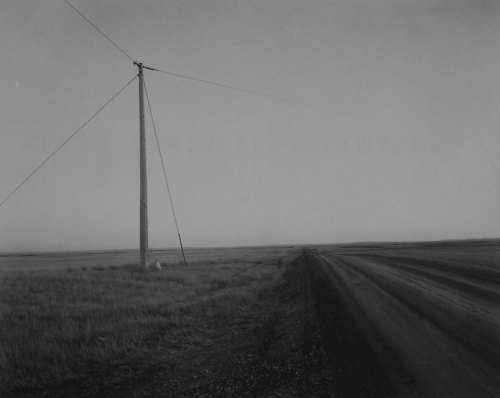
The image “30th Street West, West Lethbridge (Evening)” accompanying today’s post by Geoffrey James (1997).

11/11/2013 (12 Moons Solo Project Day 315)

12 Moons Solo Saxophone Project Day 315

Date: 11/11/2013

Instrument: Soprano saxophone

Location: The art studio on my wife’s family property.  Burien, WA

Notes:

This morning my wife and I drove back from Portland, OR and stopped off at her families house in Burien on our way home.  Her parents have a small house on their property which her father uses as an art studio.  The studio is a small, cabin-like environment with wood carvings, old radios, paintings and old family fixtures.  We lived in this studio during a few points in our early marriage to save money, and I came to enjoy the simplicity of the room.   It’s comfortable size made for easy practicing.  This afternoon I snuck off to the art studio for a half hour or so and recorded today’s improvisation.

This piece used a very similar sound and textural approach to another 12 Moons improvisation recorded last summer in Anacortes, though this piece was far more aggressive.  I played with a full-mouthed embouchure shape with my lips against the ligature.  I centered the piece around a single fingering with some slight momentary key flicking with the High G altissimo side key, Side F, and G key in the left hand.  This single fingering was as follows:

(Left Hand) 1-2-3, Low Bb // (Right Hand) 1-2-3, Low Eb, Low C

I wanted to pull out a series of honking multiphonics with a natural grittiness that really only wanted to speak with a full flood of air, and the improper embouchure shape.  During the improvisation my reed began to fracture on the upper left corner, and by the end a good chunk of the tip had been lost.  This is very unusual, but was a result of the massive force of air being put into the instrument along with the slap tonguing.  The fracturing of the reed happened slowly and I hadn’t noticed it until near the end of the piece.  This opened up new sound territories in my air flow, which I explored with the full, open air column sounds that close the improvisation.

-Neil

The image accompanying today’s post by Michael Rodriguez, on view at the Vertical Art Gallery, Chicago in May of 2013.

11/10/2013 (12 Moons Solo Project Day 314)

image

12 Moons Solo Saxophone Project Day 314

Date: 11/10/2013

Instrument: Soprano saxophone

Location: The rec room of my childhood home in Edmonds, WA

Notes:

This morning on our way out of town, I stopped by my families house and recorded a short improvisation.  We work up early to get a jump on the day, and my wife and I had several hours of driving ahead of us.  Today is her birthday, and with a busy day planned there was very little for me to practice.  These days are rare as I almost always carve out a good chunk of time to practice regardless of the day’s obligations, but now and again a day of little playing can be good medicine for an overworked mind.  I came to the horn very easily and quickly settled on what was to be recorded.  My mind was already prepared for a long day, and my improvisation reflected not impatience but urgency of thought.  Also of note, today’s post was written in Portland, Oregon.  It’s often the case that my descriptive post is written in a different location than my improvisation is performed, but today’s geographical distance is the furthest since documentation during my Bad Luck band tour last Spring.

In today’s improvisation I worked with the phasing of sound from the extreme altissimo register into the mid register, back to the upper register, and finally an equal balance of both registers.  I used both standard breathing and circular breathing during this piece.  There was no particular key center or fingering model followed, but rather I used a very loose embouchure and articulated gently but deliberately against the reed with my tongue while exploring this phasing model.

-Neil

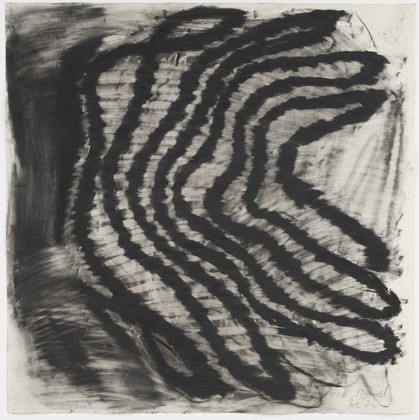
The image “Body Echo 26” accompanying today’s post by Hugh O'Donnell (1990).

11/09/2013 (12 Moons Solo Project Day 313)

12 Moons Solo Saxophone Project Day 313

Date: 11/09/2013

Instrument: Tenor saxophone

Location: Home studio in Clinton, WA (Whidbey Island)

Notes:

During my practice session this afternoon I worked out of my favorite saxophone book, “Top-Tones for the Saxophone” by Sigurd Rascher.  This book has been a constant companion nearly every day of my professional life, but I’ve taken the last month or so off from it.  It felt fresh and new to be using it again, and I quickly gravitated towards some of my favorite exercises.  My improvisation today was truly the outcome of having focused heavily on these areas in my practicing today.

Pages 8-9 fundamentally changed the way I thought about the saxophone when I started working with them several years ago.  These two pages include one very brief exercise on Rascher’s term “Tone Imagination."  His aim is for the saxophonist to play a pitch, and in their mind hear a second tone, and then move to this new tone.  This is an incredible exercise, because it forces the player to "hear” harmony without it’s actual existence.  This brings imagination to the music, but also draws attention to perfect intonation and harmony as something of the mind which can secondarily be fulfilled in reality.  This opened my up to so many possibilities inherent in textural playing.

I then moved on to pages 10-11, which focus on the intervals of the octave, perfect fourth and perfect fifth.  The player, again using imagination and careful control over their mind, is to play the exercise, but simultaneously aim for 5 areas: Perfect Intonation, Balanced Dynamics, Smooth Legato, Uniform Tone Quality, and Continuous Vibrato.  Before working out of this book, I thought I had the ability to focus on more than one musical area at once, say for example the melody I was playing, and intonation.  These are both of fundamental importance, and our teachers have always told us to mediation of these areas constantly while playing.  It wasn’t until I began working out of this book that I realized there were only fleeting moments where I could actually focus on both in equal measure.  In reality, it was predominantly one or the other, with little moments of overlapping.  I am still not able to focus on all 5 of Rascher’s musical areas at once, but I am able to isolate about 3-4 in almost equal balance, depending on my level of focus.  

Finally, I worked through pages 10-13, which begin the main thesis of the book–the overtone series.  The work in the book that precedes these pages helps the musician to strengthen their embouchure muscles and air flow, but more importantly their mind.

After finishing with this book, I began improvisation and quickly came to zone in on what would become today’s improvisation.  I recorded this piece at an extremely low level of volume.  I used two multiphonic fingerings and worked to balance melodicism with steady tempo, lower octave drones, and eventually an increase in tempo.  The first fingering had an ascending melodic shape in triplets with the pitches Eb, Bb, Db, all in the alstissimo register of the horn.  The second fingering used sixteenth notes with a subdivision of 4, the last of which accented a Db in the altissimo register.  As the piece evolved, I began slowly increasing the tempo in the second fingering with each return to it.  I kept the triplet melody in the first fingering at the original tempo.  In the last minute or so of the improvisation, I finally began increasing the tempo of the first fingering, while continuing to increase the tempo of the second.  With the steadfast focus on balanced recurring elements in this improvisation, I wanted this small of area of tempo imbalance to compliment it.  

Fingering 1 had a C (quarter step sharp) pitch articulated constantly in the mid register.  Fingering 2 had a Bb pitch articulated constantly in the mid register.  The fingerings were as follows:

Fingering 1 (triplet figure with ascending pitches Eb, Bb, Db)

(Left Hand) 1-2, Low B // (Right Hand) 1-2, Low C, High F

Fingering 2 (sixteenth note figure with every fourth pitch articulated with a Db)

(Left Hand) 2-3 // (Right Hand) 2, Low C

-Neil

The image “The Inside Story of the New York-New Jersey Vehicular [Holland] Tunnel” accompanying today’s post by Fotograms (1924).