11/08/2013 (12 Moons Solo Project Day 312)

12 Moons Solo Saxophone Project Day 312

Date: 11/08/2013

Instrument: Tenor saxophone

Location: Home studio in Clinton, WA (Whidbey Island)

Notes:

I arrived at today’s improvisation after variety of different approaches.  My initial aim was to perform a piece with a slow quarter note pulse with indeterminate intervalic pitches, punctuated by short double-tonging chromatic lines.  I then planed to abruptly shift into eight notes, and finally sixteenth notes, with the double-tonging phrases increasing until they shared equal balance with the sixteenths.  While practicing, the concept was more successful when each of three sections (quarter notes, eighth notes, sixteenth notes) were isolated.    To work at weaving the three tempos together, I tried abrupt shits in tempo, gradual increases in tempo as well as dynamic phrasing, however I felt none of these transitions did the piece justice.  

I eventually began improvising with more free phrasing, and started the improvisation from the outset at a quicker tempo with more overall energy.  I decided to continue to incorporate the double-tonguing chromatic lines intermittently, and settled on the approach of only a limited escalation in tempo from start to finish.  I also continued on with the use of wide intervalic pitch material, and also worked to develop shorter, more melodic phrases with natural pause points..  But most importantly, I decided to balance wide shifts in dynamic level from pitch to pitch.  With this approach a note may be played very muted, but the pitch that follows may be accented more heavily, slightly more, much more, etc. Finally, as the piece evolved I began gradually adding more and more of the double tonging figures between the single pitches.

-Neil

The image “Radiogram of Circle” accompanying today’s post by Bela Kalarova (1962-63).
11/07/2013 (12 Moons Solo Project Day 311)

12 Moons Solo Saxophone Project Day 311

Date: 11/07/2013

Instrument: Tenor saxophone

Location: Home studio in Clinton, WA (Whidbey Island)

Notes:

In today’s improvisation, I worked with a fingering system that emphasized natural dynamic shifts in volume inherent in the fingerings themselves.  I used a series of three fingerings, noted below as Series I, II, III.  Within each Series there were two actions, written as Action a. / Action b.  In each Action, the fingerings played were identical, but the key being trilled would change.  During each Series, I would try to blow into the horn in an identical fashion to explore the inherent differences in sound from fingering Action a. b.  In Action a, the dynamic shift was extremely pronounced, with clusters or individual pitches coming out noticeably louder.   Despite the fact that the fingering were the same, in Action b. the dynamic shifts were far less noticeable.  Again, the only difference between Actions a. and b.  was the key being trilled.  

The fingerings used were as follows:

Series I

Action a.)

(Left Hand) 1, Octave, Low Bb, Palm F only // (Right Hand) 2, Low C. 

(Left Hand) 2, Octave, Low Bb, Palm F only // (Right Hand) 2, Low C. 

For the duration of the above fingering series, trill the F key in the right hand constantly.

Action b.)

(Left Hand) 1, Octave, Low Bb, Palm F only // (Right Hand) 1-2, Low C. 

(Left Hand) 2, Octave, Low Bb, Palm F only // (Right Hand) 1-2, Low C.

For the duration of the above fingering series, trill the F key in the right hand constantly.

Series II 

Action a.)

(Left Hand) 1, Octave, Low Bb, Palm F only // (Right Hand) 2, Low C. 

(Left Hand) 1-2, Octave, Low Bb, Palm F only // (Right Hand) 2, Low C. 

(Left Hand) 2, Octave, Low Bb, Palm F only // (Right Hand) 2, Low C.

For the duration of the above fingering series, trill the F key in the right hand constantly.

Action b.)

(Left Hand) 1, Octave, Low Bb, Palm F only // (Right Hand) 1-2, Low C. 

(Left Hand) 1-2, Octave, Low Bb, Palm F only // (Right Hand) 1-2, Low C. 

(Left Hand) 2, Octave, Low Bb, Palm F only // (Right Hand) 1-2, Low C.

For the duration of the above fingering series, trill the D key in the right hand constantly.

Series III  (Same root fingerings as Series II)

Action a.)

(Left Hand) 1, Octave, Low Bb, Palm F only // (Right Hand) 2, Low C. 

(Left Hand) 1-2, Octave, Low Bb, Palm F only // (Right Hand) 2, Low C. 

(Left Hand) 2, Octave, Low Bb, Palm F only // (Right Hand) 2, Low C.

For the duration of the above fingering series, trill the F key in the right hand constantly.

Action b.)

(Left Hand) 1, Octave, Low Bb, Palm F only // (Right Hand) 2, Low C. 

(Left Hand) 1-2, Octave, Low Bb, Palm F only // (Right Hand) 2, Low C. 

(Left Hand) 2, Octave, Low Bb, Palm F only // (Right Hand) 2, Low C.

For the duration of the above fingering series, trill the D key in the right hand constantly.

-Neil

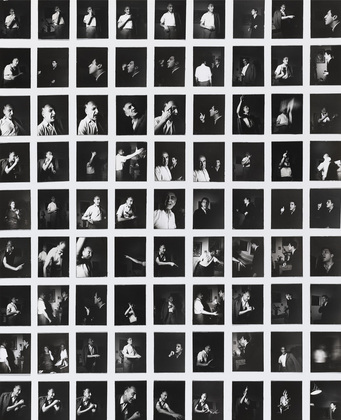
The image “The Confrontation” accompanying today’s post by Sylvia Plachy (1965).

11/06/2013 (12 Moons Solo Project Day 310)

12 Moons Solo Saxophone Project Day 310

Date: 11/6/2013

Instrument: Tenor saxophone

Location: Home studio in Clinton, WA (Whidbey Island)

Notes:

After finishing my practice session this morning, I decided to record a piece that complimented what I had focused on.  I devoted my time today to working with single pitched material with more of a melodic profile overall.  In thinking about what to record today, I decided to maintain the singular pitch approach but through the lens of rapid execution.  In this piece I wanted the sound profile to be transparent, so I shied away from giving the impression of polyphony very often, except for brief moments in the piece.  I felt these small impressions of polyphony helped to further elaborate the reality that the bulk of the material took a more arpeggiated approach, and again, was in reality only single-pitched without any true harmony at all.

During this improvisation I used some dynamic and articulation shaping to help bring about changes in the piece.  This also included occasional accenting of pitches to give moments of respite from the thick nest of sound.  I approached the piece from the vantage point of a root fingering shape, which was played in the following order:

(Left Hand) 1-2-3, Low Bb // (Right Hand) 1-2

(Left Hand) 1-2-3, Low Bb // (Right Hand) 1-2, Side Bb

(Left Hand) 1-2-3, Low Bb // (Right Hand) 1-2

(Left Hand) 1-2-3, Low Bb

(Left Hand) 1-2-3, Low Bb, Palm D

(Left Hand) 1-2-3, Low Bb

This was only a jumping off point, and I began diverging from this actual pattern almost immediately.  Other alterations include putting down the D and Low C keys in the right hand, opening and closing the G key in left hand and Fork F key in the left hand, among others.

-Neil

The image “Mushroom Book” accompanying today’s post by John Cage, Lois Long (1972).

11/05/2013 (12 Moons Solo Project Day 309)

12 Moons Solo Saxophone Project Day 309

Date: 11/05/2013

Instrument: Tenor saxophone

Location: Home studio in Clinton, WA (Whidbey Island)

Notes:

This morning I gave a 20 minute lecture on the music of John Coltrane to a group of 7th and 8th graders before beginning our weekly clinic.  I do these brief clinics from time to time, if for no other reason that to show kids that an adult in their life can be whole-heartedly passionate about something.  I compared two recordings–“Blue Trane” from the album of the same name, and Jupiter, from “Interstellar Space."  I wanted to show them two extraordinary achievements in sound and message.  My lecture swayed more towards the later, and I tried to tease out of them what this message could be for each of us–the subjective message–and why it’s worthy of our attention.  

After finishing my class, I recorded a few minutes later in the main performance hall adjacent to the band room.  The lights in the room were not working, and that end of the building was uncharacteristically quiet for that time of the morning.  I decided to carry Coltrane’s soulful energy into my improvisation today.  This piece uses wide arches of sound with no pre-scripted approach, save for my own thoughts on Coltrane’s message and its place in my own music.

-Neil

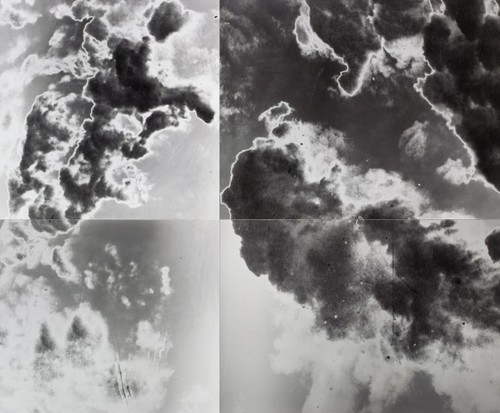
The image Man holding large camera photographing a cataclysmic event, possibly a volcano erupting, 1908/2012 (Tiled Version 3).” accompanying today’s post by Lisa Oppenheim (2012).

11/04/2013 (12 Moons Solo Project Day 308)

12 Moons Solo Saxophone Project Day 308

Date: 11/04/2013

Instrument: Tenor saxophone

Location: Home studio in Clinton, WA (Whidbey Island)

Notes:

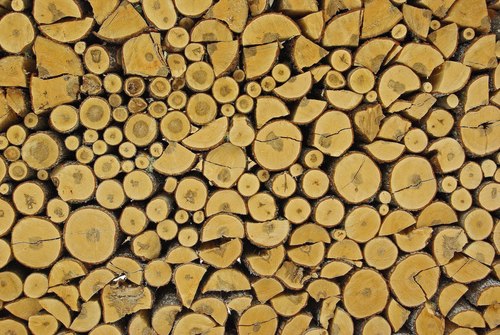
This morning I had a cord of wood delivered, and I got right to stacking it up in the wood shed.  Living on Whidbey Island, it’s very special for me to have this wood.  The sellers usually live in the areas they deliver to, and the wood is often harvested off their own land.  Seeing the massive pile dumped in my driveway brings me right into the Fall and Winter.  It’s also very special for me to stack it.  I love seeing the tight pack with the jagged, cracked face of the stack.  It represents warmth and abundance, and a direct connection to the land around me.  After finishing the hauling and stacking of it this morning, I went in to practice with a light heart and a clear mind.

In this improvisation I oscillated between two semi-dissonant chords, with transitions into chromatic passages with ascending and descending chord shapes.  The dissonant chords were interpreted in two different ways.  The first interpretation opens the improvisation, with muted tones in the bottom part of the upper register sounding a minor third melody.  The second interpretation included a more liberal playing of the two fingerings where I worked to capture new clusters and swooping overtones in the chords.  This same interpretation eventually settles on another minor third melodic interval, this time played in the altissimo register.  All of these shapes used the same two fingerings, which were played with the following fingerings:

Two semi-dissonant chords (with descending minor third melodic intervals)

(Left Hand) Fork F, 2, Palm Eb only, Low B // (Right Hand) 1-3, Low C

(Left Hand) 1-2, Palm Eb only, Low B // (Right Hand) 1-3, Low C

The chromatic figure was played using the second of the above fingerings, with additional keys added and taken away to execute the figure.  I interpreted this chromatic passage in a number of ways, including rapid articulation, speeding up and slowing down, accenting of internal tones, as well as bringing out higher octave pitches.  The chromatic figures were played with the following fingerings:

Ascending:

(Left Hand) 1-2, Palm Eb only, Low B // (Right Hand) 1,2, 3, Low C

(Left Hand) 1-2, Palm Eb only, Low B // (Right Hand) 1-3, Low C

(Left Hand) 1-2, Palm Eb only // (Right Hand) 1-3, Low C

(Left Hand) 1-2, Palm Eb only, Low C# // (Right Hand) 1-3, Low C

Descending:

(Left Hand) 1-2, Palm Eb only // (Right Hand) 1-3, Low C

(Left Hand) 1-2, Palm Eb only, Low B // (Right Hand) 1-3, Low C

(Left Hand) 1-2, Palm Eb only, Low B // (Right Hand) 1,2, 3, Low C

-Neil

The image of a wood pile accompanying today’s post from hikinginmainewithkelley.blogspot.com.  This wood pile was come upon by the blog’s author while hiking in the back woods of Maine.