07/01/2013 (12 Moons Project Day 182)

12 Moons Solo Saxophone Project Day 182

Date: 07/01/2013

Instrument: Soprano saxophone

Location: Beside Nason Creek near Lake Wenatchee, WA

Notes:

My wife and I struck out first thing this morning east of the mountains in our 78 VW bus.  We traveled along Highway 2 towards one of our favorite camping spots, a rustic national forest camp on the western side of Lake Wenatchee, about 15 miles over Stevens Pass.  It is a sweltering day, with temperatures around 100 degrees with clear blue skies overhead.   To practice and record, I drove out along the main road a few miles and found a pullout next to Nason Creek, which feeds the lake further to the north.  I made the mistake of waiting until the afternoon and was plagued by mosquitoes, flies and the blistering afternoon sun as I struggled for an hour to play.  Directly in front of me was Nason Creek, and behind me was the main road leading away from the lake.

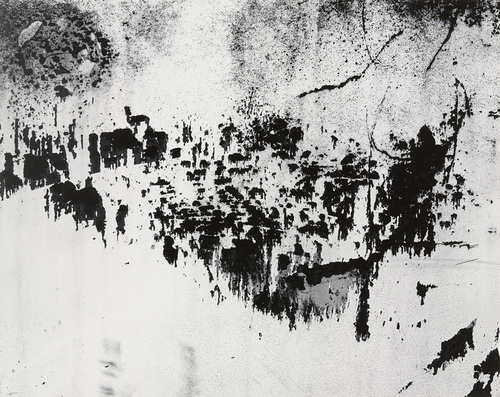
This improvisation was a response to my discomfort.  I was not only frustrated by the constant bombardment of mosquito bites, but also the flow of traffic behind me–trucks with jet skies and boats in tow barreling down the road, and cars stopping to curiously look at me until driving away without a word spoken.  I decided to respond by improvising a quietly aggressive piece, like the persistent force of the sun beating down on me.  I used detached, high pitched dots and smears, and stayed mostly in the altissimo range of the instrument.  I used single tonging and balanced more isolated pitches with clusters of much higher tones of a greater density of notes.  To create a recurring point of departure I mostly alternated between two fingerings, and occasionally diverged from there to add further pitches.  These two fingerings were as follows:

Fingering 1:

(Left Hand) B-A-G keys, Octave, Low Bb // (Right Hand) Low C, High F#  

Fingering 2:

(Left Hand) B-A-G keys, Octave, Low Bb // (Right Hand) Low C, High F#, High Side G

-Neil

The image “untitled” accompanying today’s post by Nathan Lyons (1958)

12 Moons Project Days 182/183 will likely be delayed

I’m out of town again for the next few days camping in Eastern Washington.  Depending on web access, the next couple of posts may have to wait until Wednesday of this week.  Hold tight for now and thank you for listening!

06/30/2013 (12 Moons Solo Project Day 181)

12 Moons Solo Saxophone Project Day 181

Date: 06/30/2013

Instrument: soprano saxophone

Location: A trail on the edge of Mountain Lake in Moran Sate Park.  Orcas Island, WA

Notes:

This morning I woke up early and my wife and I walked to Mountain Lake to take in the morning calmness.  The lake is large and clean, so much so that I could toss a rock off the edge of a bluff and watch it sink fully to the bottom.  I walked about a quarter way around the lake on a trail that followed it’s edge.  I stopped to play beneath a large pine tree on the edge of a bluff that overlooked the lake.   Though this recording does not accurately capture it, the echo from my horn traveled an amazing distance, bouncing and pulsing with a warm sound around the lake.  I was at least ½ of a mile away from our campsite, and when we walked back in I was told by our comrades that they could hear me practicing, and thought I had walked just a little ways into the woods.  

During this improvisation I focused on tight sound clusters in various combinations.  A recurring theme became the major chord multiphonic which I would hold out and increase in tempo before abruptly cutting it off with my tongue.  With the clustered pitches, I worked to create simple, almost folk-like melodies with tiny chord flutters.  I would set these against the more severe but steady multiphonics.  Mid way in the piece I worked to bridge these two approaches by unifying the clusters into quick melodic actions that combined various chords.  

-Neil

The image “Tatra Mountains” accompanying today’s post by Emil Orlik (1898)

06/29/2013 (12 Moons Solo Project Day 180)

12 Moons Solo Saxophone Project Day 180

Date: 06/29/2013

Instrument: Soprano saxophone

Location: A forest clearing inside Moran State Park.  Orcas Island, WA

Notes:

This weekend my wife and I are staying at Moran State Park on Orcas Island.  Orcas is located in the San Juan island chain, about a 1 hour ferry boat ride from the mainland, and another hour and a half to Seattle from there.  The island is accessible only by boat, and is filled with pristine old growth forests, mountains, and several lakes.  Today we’re staying at a camp ground, the bulk of which is dug out of a steep, thickly forested mountain side.  This morning I decided to take my horn and trudge up the mountain in search of solitude and inspiring natural surroundings.  I did not follow any established path, and instead carved my own straight up the hill.  I had to climb over recently fallen timber, old nursing logs and thick underbrush.  I hiked for about 20 minutes, until the campsite below was far behind me, and the feeling of it–the laughing children, camp fires, parents and cars were out of sight, mind and earshot.  

I arrived at my recording location as though it were prepared for me.  Playing from the top of a hill, a gully below made a steep, cup shaped downward slope that pushed my sound outward.  I placed the mic about 50 feet below me, and listened to my surroundings.  The birds were out in abundance with their variety of calls, and I decided to create my own recurring melodic shape by using upper register overtones.  I stayed within an octave or so range, dipping the sound up, and occasionally down and up to settle on a pitch that the horn called out for.  I tried to pace my melodic action based on the duration of silence between the other calls around me.  I used a single fingering in this improvisation, which was as follows:

(Left Hand) Fork F, G keys, Low B or Low Bb // (Right Hand) F-E keys.  To help facilitate a more even downward to upward bend, I would occasionally slowly trill the Low C key in the right hand.

-Neil

The image “Graphis 89, for a drama” accompanying today’s post by Dick Higgins (1961).