Neil Welch, Continuous Resonance Project
Date: 11/20/2014
Location: Home studio in Clinton, WA (Whidbey Island)
Instrument: Tenor saxophone/harmon mute
Notes:
It rained last night for the first time in about two weeks. For many days the sky has been clear with little wind and the air bitterly cold. This weather has been most welcome, but I was surprised to find how glad I was on waking this morning to see grey sky and a light wind blowing through the trees.
At the end of my practice session this morning right before I needed to run out the door to teach, I worked to channel the spirit of this day in an improvisation. In this piece I used two trilled fingerings as well as intermittent singing into the horn. The fingerings included the standard Low E and Low D fingerings with the Low Bb key depressed throughout and a constant trilling of the G key in the left hand. The sung melody was improvised within this undulating texture.
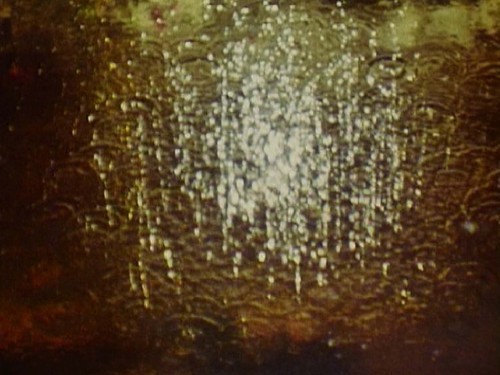
The image “Explosion Under Water” (1980) by Roman Signer.
11/19/2014 (Continuous Resonance Solo Improvisation)

Neil Welch, Continuous Resonance Project
Date: 11/19/2014
Location: Home studio in Clinton, WA (Whidbey Island)
Instrument: Tenor saxophone/harmon mute
Notes:
This improvisation makes use of a harmon mute, which I put inside my bell. This accounts for the rattling sounds as well as many of the bright overtones in the overall sound profile.
The image “the cloud series” accompanying today’s post by Ralph Steiner.
11/16/2014 (Continuous Resonance Solo Improvisation)
Neil Welch, Continuous Resonance Project
Date: 11/16/2014
Location: Home studio in Clinton, WA (Whidbey Island)
Instrument: Tenor saxophone
Notes:
During this improvisation I focused primarily on the Low Bb, which is the bottom most pitch in the saxophone’s traditional range. However I also used a regularly practiced technique of leaning the bell into my leg to drop the Low Bb to approximately to the tempered pitch of an A. During this piece I worked with the dramatically different timbre of the free-blowing Bb and the muted A.
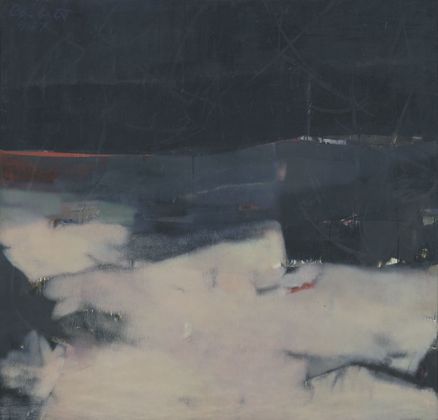
The image “Lejos de Socorro” (1957) accompanying today’s post by Edward Corbett.
11/15/2014 (Continuous Resonance Solo Improvisation)
Neil Welch, Continuous Resonance Project
Date: 11/15/2014
Location: Home studio in Clinton, WA (Whidbey Island)
Instrument: Tenor saxophone
Notes:
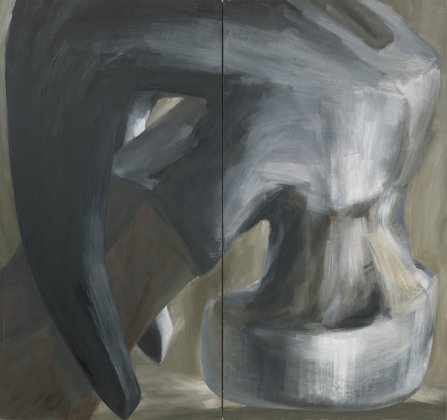
The image “Untitled” 1963) accompanying today’s post by Lee Lozano.
11/14/2014 (Continuous Resonance Solo Improvisation)
Neil Welch, Continuous Resonance Project
Date: 11/14/2014
Location: Home studio in Clinton, WA (Whidbey Island)
Instrument: Tenor saxophone
Notes:
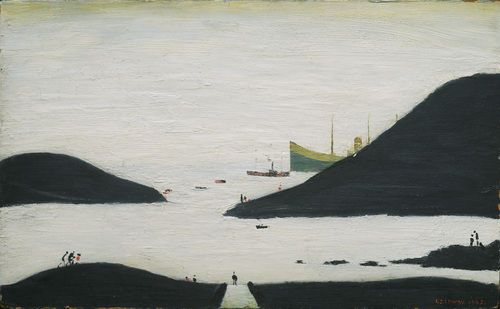
The image “Ships Near Cumberland Coast” (1963) accompanying today’s post by Lawrence Stephen Lowry.