Neil Welch, Continuous Resonance Project
Date: 09/19/2014
Location: Home studio in Clinton, WA (Whidbey Island)
Instrument: Tenor saxophone
Notes:
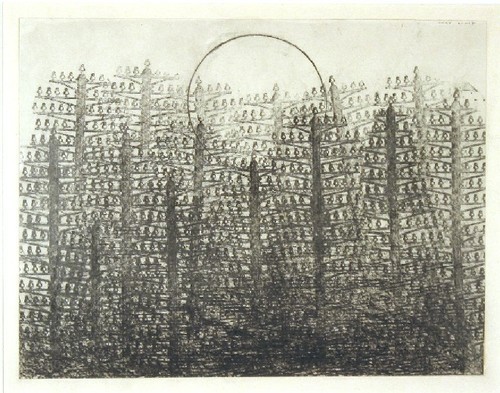
The image “Foret et Soleil” (1931) accompany today’s post by Max Ernst
09/17/2014 (Continuous Resonance Solo Project) 2 of 2

Neil Welch, Continuous Resonance Project
Date: 09/17/2014
Location: Home studio in Clinton, WA (Whidbey Island)
Instrument: Tenor saxophone
Notes:
Improv 2 (09/17/14) of 2 (09/15/14)
Today’s improvisation as well as the previous from 09/15/2014 were drawn from the same energy source, though not intentionally. I seem to have stayed in the same head space the last few days, and I believe these two recordings represent the entrance and exit of this experience.
The Image “The end of the Fence, Looking West” (1997) from the series “Running Fence” accompanying today’s post by Geoffrey James.
09/15/2014 (Continuous Resonance Solo Project) 1 of 2
Neil Welch, Continuous Resonance Project
Date: 09/15/2014
Location: Home studio in Clinton, WA (Whidbey Island)
Instrument: Tenor saxophone
Notes:
Improv 1 (09/15/14) of 2 (09/17/2014)
Today’s improvisation as well as the following from 09/17/14 were drawn from the same energy source, though not intentionally. I seem to have stayed in the same head space the last few days, and I believe these two recordings represent the entrance and exit of this experience.
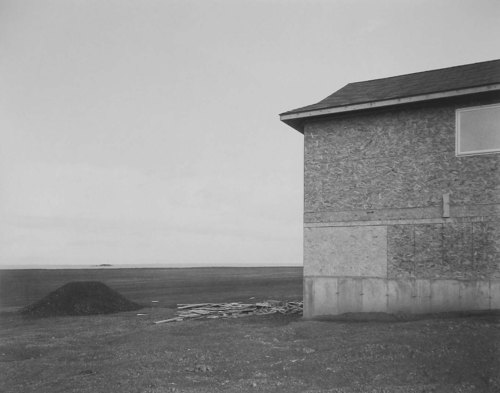
The image “Uplands” (1999) accompanying today’s post by Geoffrey James.
09/10/2014 (Continuous Resonance Solo Improvisation)
Neil Welch, Continuous Resonance Project
Date: 09/10/2014
Location: Home studio in Clinton, WA (Whidbey Island)
Instrument: Tenor saxophone
Notes:
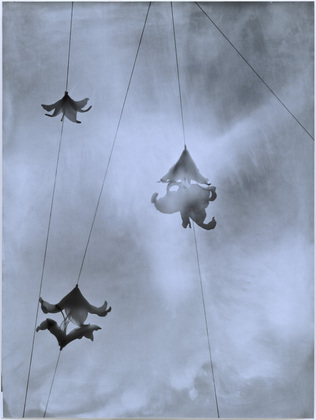
The image “Compounds.A.Positive” (1997) accompanying today’s post by Kunie Sugiura
09/04/2014 (Continuous Resonance Solo Improvisation)

Neil Welch, Continuous Resonance Project
Date: 09/04/2014
Location: Home studio in Clinton, WA (Whidbey Island)
Instrument: Tenor saxophone
Notes:
I used two fingering motions in this improvisation, alternating between the Low Bb and Low B fingerings, each one played for some time before moving on to the next. While doing this I would slowly trill open and closed the low C key key. To create actual chord shapes I began singing into the horn while executing these two fingering motions. I sang the pitches Gb and Eb in the upper and lower registers. Depending on the octave and fingering being used, the vocal part could sound full and almost like a cry or would be muted and more subdued in spirit. After establishing a key center by singing the Gb/Eb minor third melody I would often abruptly stop singing and shift to the second fingering system. This changed the key as well as the overall aesthetic of the piece.
The image “Untitled (Heat/Gun)” 1999 accompanying today’s post by Marco Breuer.