Neil Welch, Continuous Resonance Project
Date: 06/21/2014
Location: Home studio in Clinton, WA (Whidbey Island)
Instrument: Tenor saxophone
Performed Acoustically
Notes:
I spent the morning working with two fingering systems that created a very melancholic sound profile. When approached melodically, they functioned as an incantation of sorts. When paired together, the two fingerings created separate clusters with the following pitches: C#/D and G#A. I developed slight changes in the fingering systems as well as embouchure control to create a very melodic landscape with the following overall moldy: C#—-DC#—A-G#–.
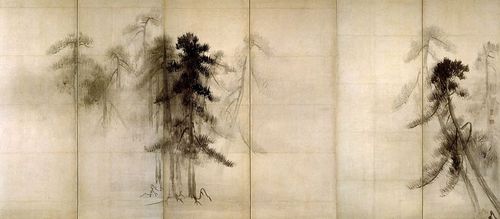
Though this improvisation was not originally inspired by the photo accompanying today’s post, I strangely had the image of a forest depicted through Japanese painting in my mind while playing. This image dose the vision justice.
-Neil
The image accompanying today’s post is a traditional Japanese painting. Source unknown.
06/17/2014 (Continuous Resonance Solo Improvisation)
Neil Welch, Continuous Resonance Project
Date: 06/17/2014
Location: Performance Hall at Chief Sealth High School. Seattle, WA
Instrument: Tenor saxophone
Performed Acoustically
This improvisation was recorded between teaching my students this afternoon. In the final moments of this recorded work I paused to consider whether the piece was finished, and it was at this very moment that a student interrupted me in the hall by walking on stage and calling out my name. This helped to seal my decision to stop.
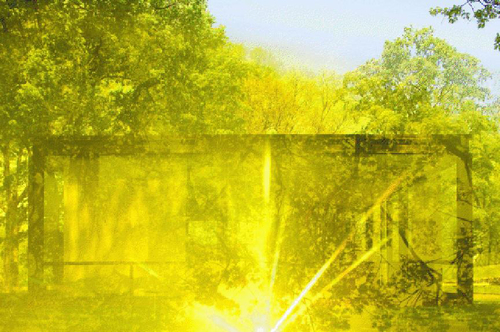
The image from the series “Glass House” (2008) by James Welling.
06/14/2014 (Continuous Resonance Solo Improvisation)
Neil Welch, Continuous Resonance Project
Date: 06/14/2014
Location: Glacier View campground. Lake Wenatchee, WA
Instrument: Tenor saxophone
Performed Acoustically
Notes:
This weekend my wife and went to one of our favorite rustic campsites, the Glacier View National Forest campground at Lake Wenatchee, WA. The lake is located just East of Stevens Pass, and the cold wind blew straight down the mountain onto the lake this weekend.
On our second day into the camping trip, I decided to improvise a piece that utilized this wind. I set up my mic at the base of a large pine tree and waited for the wind to die down a bit. I then improvised using two pitches as the fundamental basis for the piece. I would lean away from the mic when the wind stayed calm, and lean into it when it picked up in order to accentuate the clipping in the microphone from the wind. In the last minute of the piece the wind became much more fierce, and I used this as an opportunity to explore more sustain in my sound.
-Neil
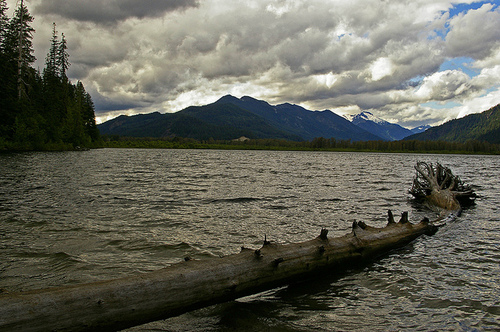
The image accompanying today’s post is a few out at Lake Wenatchee from the Glacier View campground.
06/12/2014 (Continuous Resonance Solo Improvisation)
Neil Welch, Continuous Resonance Project
Date: 06/12/2014
Location: Home studio in Clinton, WA (Whidbey Island)
Instrument: Tenor saxophone
Performed Acoustically
Notes:
The acoustic response of a reed is a critical element of woodwind performance. This week I had an exceptional reed, one which was full, responsive, and had a dark and lovely tone quality. The reed was particularly responsive to tighter tone clusters in the upper register, which is what I documented in today’s improvisation.
-Neil
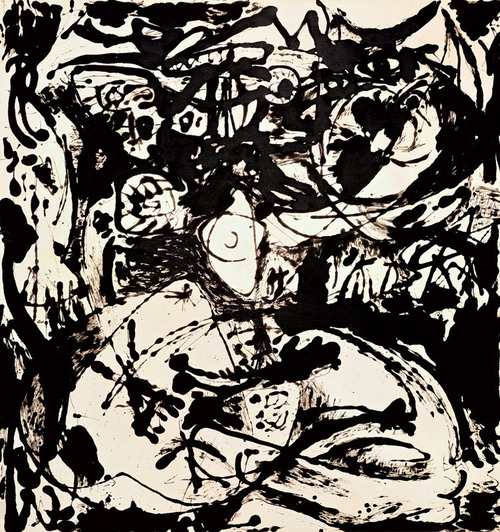
The image “Number 18th, 1951” by Jackson Pollock (1951)
06/06/2014 (Continuous Resonance Solo Project) Improv 2
Neil Welch, Continuous Resonance Project
Date: 06/06/2014
Location: Home studio in Clinton, WA (Whidbey Island)
Instrument: Tenor saxophone
Performed Acoustically
Notes:
Improvisation Two
I recorded two improvisations this morning. In this, the second of the two improvisations, I wanted to create a kind of singular, free flowing melodic line. I wanted it to feel as though it had no beginning or ending, but just a feeling of subconscious motion. The multiphonic chords were intended to be played in such a fashion as to fold their colors into this melodic line rather than try to interrupt it. This folding in of chords is a concept I’ve been working on during my practice sessions lately.
The image “#117 Rochester” by Richard M. Margolis (October 6, 1976).