12/19/2013 (12 Moons Solo Project Day 353)

12 Moons Solo Saxophone Project Day 353

Date: 12/19/2013

Instrument: Tenor saxophone

Location: Home studio in Clinton, WA (Whidbey Island)

Notes:

During a brief practice session this morning I worked with extreme dynamic shifts with abrupt texture changes.  In what eventually became today’s improvisation, I isolated two lower register pitches and two upper register textures, and paired each of the lower tones with the same upper texture each time.  I used the powerful bell tone pitches B and Bb, and played each of them at a high volume with a wide vibrato and faster oscillation.  The upper textures were played with no vibrato and were held at an extremely low volume.  The Low B was paired with a split-tone Ab/Bb in the upper register, and the Low Bb was paired with a muted single Bb pitch in the upper register.   These fingerings were as follows:

Low Register B

Standard Low B fingering

Upper register texture: Ab/Bb split-tone

(Left Hand) 1-2, Octave, Low Bb // (Right Hand) 1-2-3, Low Eb

Low Register Bb

Standard Low Bb fingering

Upper register texture: Muted Bb

(Left Hand) 1-2, Octave, Low B // (Right Hand) 1-2-3, Low Eb

In performing this improvisation, I tried my best to execute the low register pitches with a common vibrato, constant vibrato oscillation, and common dynamic level.  I was moderately successful at this.  I tried to follow suit with the upper register tones as well, attempting to play each sound in turn with a constant dynamic level.  For the upper register Bb (paired with the Low Bb), I attempted to play this pitch as quietly as possible.  However the Ab/Bb split tone pitch (paired with the Low B), I played at a slightly higher volume.  Again, I was only moderately successful at maintaining consistency.  With the extreme dynamic and texture changes, I recognized an opportunity to use silence as a compositional component.  With this in mind I used abrupt cut-offs when moving between octaves and when finishing phrases.  This was done to heighten the potency of the silence when it was utilized.

-Neil

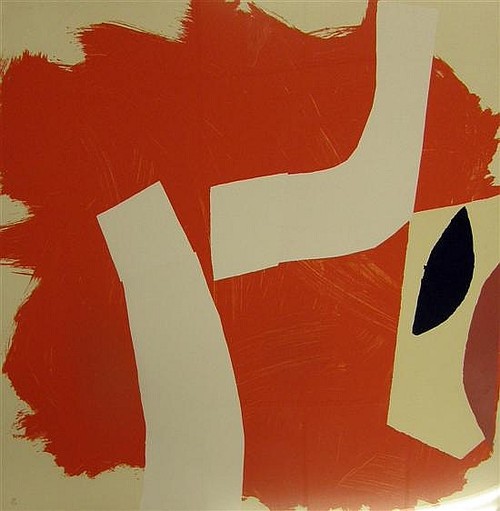
The image “Through and Beyond” accompanying today’s post by Sandra Blow.
12/18/2013 (12 Moons Solo Project Day 352)

12 Moons Solo Saxophone Project Day 352

Date: 12/18/2013

Instrument: Tenor saxophone

Location: Home studio in Clinton, WA (Whidbey Island)  

Notes:

My improvisation today is a textural exploration of a single fingering, with a constant trill in the mid register, the sound of which remains stable while the textures above it morph and evolve. This single fingering was as follows:

(Left Hand) 1, Octave, F palm key only (played with the pinky) // (Right Hand) 2.  Trill the side F# constantly.

I entered the improvisation with a blast of color and immediately established a high level of energy.  From this point forward I worked to create a wide array of textures that I found to be possible with this simple fingering.  My reed today was particularly stiff, which contributed to the range of possible sounds.  I incorporated a Concert C trill to function as a drone beneath the far denser material above it, which I feel provided a center point for the improvisation to pivot around.  A great challenge for me was to maintain clarity in this trill while establishing unity between these binary worlds.  This was particularly challenging when the upper textural material was less static and more of a sound exploration.  

-Neil

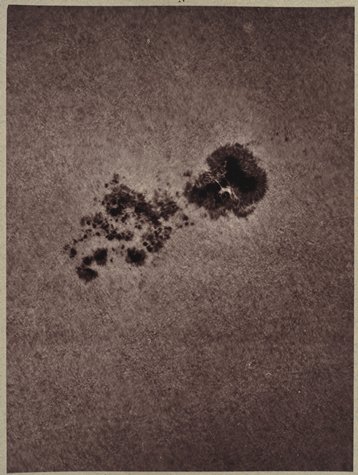
The image “Surface of the sun” accompanying today’s post by Pierre Jules Cesar Janssen (1885).

12/17/2013 (12 Moons Solo Project Day 351)

image

12 Moons Solo Saxophone Project Day 351

Date: 12/17/2013

Instrument: Tenor saxophone

Location: Main performance hall at Chief Sealth High School.  Seattle, WA 

Notes:

Today will likely be my last available day to record in the Chief Sealth performance hall during the 12 Moons project.  This improvisation has eluded me all year.  Each week I’ve been on the lookout for it–a quiet, melodic landscape with open harmonic language.  As I’ve described in past posts regarding this hall, the space is a difficult room for me to record in.  The room sounds absolutely magnificent, but my own deficiencies as a player often creep up when I walk into it.  It’s a large room with tall ceilings, only 5 or so years old.  The stage is enormous, and from the center of it the empty seats point inward with remarkable uniformity, their vivid, blood-red fabric has yet to fade with time.  An old ghost in me waited patiently for the right moment to record this improvisation, and I’m grateful it came today.  

I approached this piece freely, opening myself to the wonderful quietness and crystal-clear resonance of the room.  There were some melodic themes that crept up unexpectedly.  The opening figure for example seemed to want to recapitulate at the end of the improvisation within my really focusing on it whatsoever.  This was not intentional, but perhaps a testament to the simple melodies the room was offering me today.

-Neil

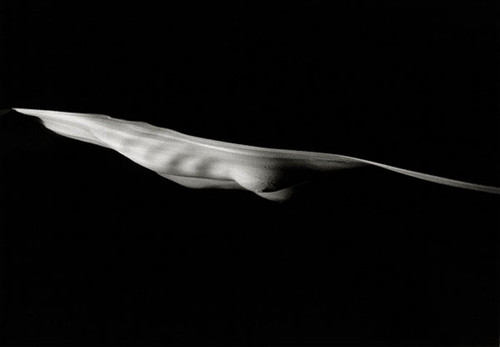
The image accompanying today’s post by Connie Imboden.

12/16/2013 (12 Moons Solo Project Day 350)

12 Moons Solo Saxophone Project Day 350

Date: 12/16/2013

Instrument: Tenor saxophone

Location: Home studio in Clinton, WA (Whidbey Island)

Notes:

This morning I worked with consonant, B Major chord textures while singing the fixed pitch B into the horn.  I used a series of 4 fingerings, each of which contained pitches found in the chord, or tonicized the chord through a dominant function.  These fingerings were as follows:

Fingering 1:

(Left Hand) 1-2-3, Octave, Low B // (Right Hand) 1-2-3, Low C

Fingering 2:

(Left Hand) 1-2-3, Octave, Low B // (Right Hand) 1-2-3, Side F, Low C

Fingering 3:

(Left Hand) 1-2-3, Octave, Low B // (Right Hand) 1-3, Low C

Fingering 4:

(Left Hand) 1-2-3, Octave, Low B // (Right Hand) 1-3, Side F Low C

I approached these fingerings freely during the improvisation, exploring their inner parts and trying to maintain a road map of my harmonic discoveries along the way.  There are subtler, more tender moments when voice exchange can clearly be herd between the fingerings.  At other times the my embouchure shape and the shear force of air briefly pulled tones from outside the established B Major tonality.  A good example of this is Fingering 2, which functioned as an F# dominant chord.  It enters for the first time at about half way into the piece, but because this was a pliable chord shape as far as the physical execution was concerned, it seemed to bend to its own will at times and pull away from this dominant function.

-Neil

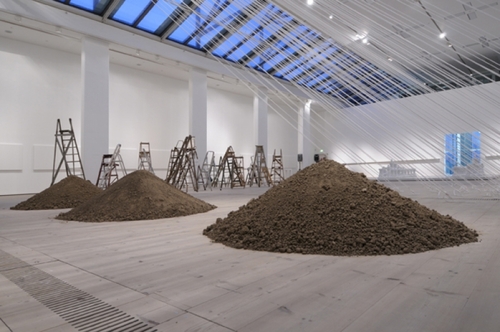
The image “Three Mounds and Skyladders” accompanying today’s post by Yoko Ono (1999-2008).

12/15/2013 (12 Moons Solo Project Day 349)

12 Moons Solo Saxophone Project Day 349

Date:12/15/2013

Instrument: Tenor saxophone

Location: Home studio in Clinton, WA (Whidbey Island)

Notes:

On December 5th, the world lost a powerful icon for freedom, activism, and humanity.  Nelson Mandela died at the age of 95 in Johannesburg, South Africa.  As with millions of people throughout the world, I’m saddened by his passing but so thankful for the living legacy his work has given us.  So many leaders of men are expected to be effective yet remain clean of controversial opinions and actions.  Madiba showed me that activism, diversity of political thought and a clear vision can effect change in so many lives.  My improvisation today was inspired by and dedicated to the memory of Nelson “Madiba” Mandela.

Today I did my sincere best to impart a loving, radiant atmosphere.  In this piece I worked with primarily the major pentatonic scale in D Major, creating a sound profile that I felt  had an almost dance-like quality to it.  I recorded many versions of this improvisation, most of considerably longer length than the piece chosen today.  I used the recording process to whittle down extemporaneous material, and arrived at a very simple, melodic piece.  I used traditional fingerings as well as a split-tone sound, and a multiphonic fingering.  The split-tone was approached with false fingerings to create a sound cycle with the pieces D, E and F#.  This is the texture that opens the improvisation.  I also used this same fingering to create the split tone chord E and C# that is held near the 1 minute mark.  The multiphonic fingering was a simple D major chord that I began incorporating at the mid point of the piece.   These two fingerings were as follows:

Sound Cycle (D, E and F#) and Split-tone chord (E and C#)

(Left Hand) 1-2-3, Octave, Palm Eb only, Low Bb // (Right Hand) 1-2.  To create the Sound Cycle, take away the F key, Palm Eb, each in turn, exploring a total of 3 pitches: D, E, and F#.

D Major Chord/Multiphonic

(Left Hand) 1-2-3, Low Bb, Octave // (Right Hand) 2-3, 

Rest in peace Madiba.

-Neil

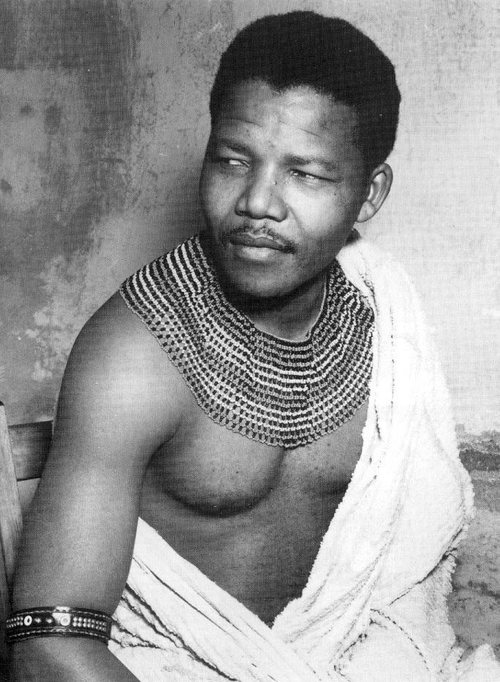
The image accompanying today’s post is Nelson Mandela at the Rivonia Trial.