09/07/2013 (12 Moons Solo Project Day 250)

12 Moons Solo Saxophone Project Day 250

Date: 09/07/2013

Instrument: soprano saxophone

Location: Beside a creek in Daggettville, Oregon

Notes:

While still camping on the Oregon coast today, my wife and I drove down Highway 101 for about 70 miles (140 miles round trip), making our way from Cannon Beach to about Newport.  We experienced an extraordinary array of scenery, from grand vistas looking out at the Pacific Ocean, to beach-side towns with families and tourists, open farmland and heavily treed foothills.  Near the town of Hebo, OR we took a highway going East off of Highway 101, passing a very small farming community called Daggettville, and again followed another road into the foothills.  We eventually stopped alongside a medium-sized creek, located well outside the town on an old road.  

I set up my mic on a natural earthen overhang above the creek, and improvised a simple bluesy melody that I thought fit the mood.  The location was serene, with old chestnut trees, birch and cedar along the bank tucked into a lightly forested landscape.  The air was warm a clean, with an occasional breeze reinforcing it, or instead bringing with it the smell of cattle from nearby farms.  The spirit of this place led me towards this bluesy piece.  In it, I explored the common Dorian Minor scale in the concert key of A.  I used traditional fingerings in the first half but all the while sung the same pitches into the horn.  In the later half of the piece I again maintained the singing and the same scale, but used the low B fingering while opening and closing the side Bb and side C, creating a fingering cycle that fractured the purity of the straight tones explored in the first half of the improvisation.

-Neil

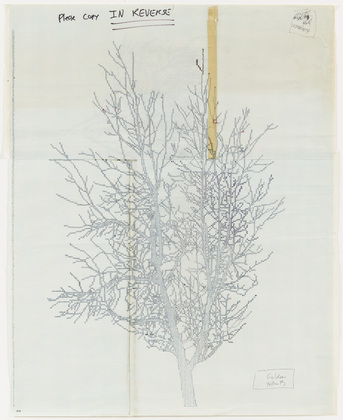
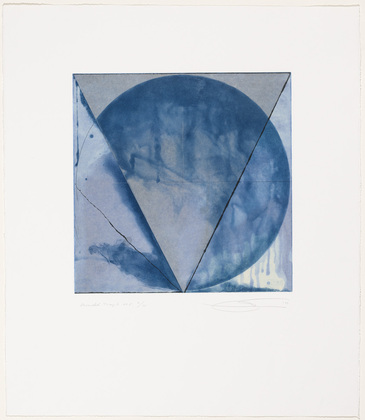
The image “Working Drawings for Numbers and Trees #7” accompanying today’s post by Charles Gaines (1989-90).
09/06/2013 (12 Moons Solo Project Day 249)

12 Moons Solo Saxophone Project Day 249

Date: 09/06/2013

Instrument: Soprano saxophone

Location: A road pullout South of Cannon Beach, Oregon

Notes:

This weekend my wife and I decided to go camping in Oregon, and tonight found ourselves on the coast near Cannon Beach.  This is a very popular tourist destination for entering the seemingly unending twists and turns of Highway 101 South.  Even though the terrain surrounding the coast is rugged and forested, the shear beauty of it has led to widespread development. In the area we found to camp it was difficult to find even a pullout that didn’t have a house at the end of it.  I stumbled on a small dirt road that lead into what will eventually be a large housing development on a steep hillside overlooking the water.  It’s raining steadily today, and what was a thick forest has now been removed, leaving a long and barren scar of sopping mud with fire hydrants and future driveways carved out.  

In today’s improvisation I used the faster walking trill against the Fork F key, creating an aggressive, pliable sound area that allowed me to bend notes up and down a wide range.  This improvisation is much looser in execution, and I wanted to explore wider pitch bends and large dynamic shifts.  The first half of the piece explores this spectral concept, but the later half is performed at a very low dynamic level, again using the same fingered technique.  The fingering used was as follows:

(Left Hand) B-A keys, Low Bb // (Right Hand) Walking trill on the Fork F key (using the index and middle finger).  The octave key and low Bb were also occasionally lifted or depressed during this improvisation.

-Neil

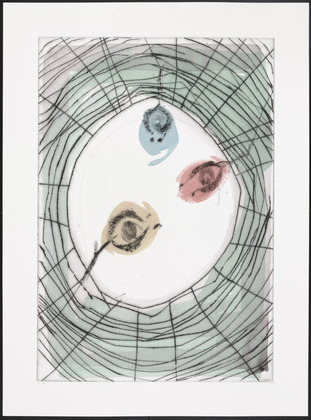
The image “Untitled from untitled” accompanying today’s post by Gert Tobias (2008).

09/05/2013 (12 Moons Solo Project Day 248)

12 Moons Solo Saxophone Project Day 248

Date: 09/05/2013

Instrument: Tenor saxophone

Location: Practice Room B at South Whidbey High School.  Langley, WA (Whidbey Island)

Notes:

This is my second day in a row documenting from Practice Room B at South Whidbey High School.  Yesterday I explored the room by creating the illusion of polyphony with specific single-pitch cycles.  Today I approached the space with the criteria of dynamic range as my main improvisatory drive.  I improvised a piece with wide timbre shifts from bright to muted pitches, and used a wide spectrum of volume to further widen the differences in timbre. 

The brighter tones and muted tones originated from a common parent fingering which became my springboard for sound exploration.  This fingering was as follows:

(Left Hand) B-A, Octave, Low B // (Right Hand) F, Low C.  Trill the E key in the right hand constantly.

This created a bright, upper register tone that oscillated by a semi tone sharp as the E key was trilled.  I then slightly opened the Fork F key, which created a split tone about a quarter step high.  This bright split-tone dominated the sound spectrum in the room.  By taking away the octave key, again with the same fingering, a muted Concert C in the middle octave (quarter step sharp) abruptly takes over.  The stark difference between these two sound worlds became a point of departure to add additional tones and to explore sound color.  Also of note, the multiphonic chord occasionally used is again derived from the same fingering, but pulled out with an adjustment in my embouchure.

-Neil

The image “Surface is the Between, Between Vertical and Horizon–Descended Triangle No. 5” accompanying today’s post by Shoichi Ida (1987).

09/04/2013 (12 Moons Solo Project Day 247)

12 Moons Solo Saxophone Project Day 247

Date: 09/04/2013

Instrument: Tenor saxophone

Location: Practice room B at South Whidbey High School.  Langley, WA (Whidbey Island)

Notes:

During a long break between students this afternoon, I explored the reverberant sound of practice room B at South Whidbey High School.  The shear mass of sound from the saxophone seems to overwhelm this room even at a quiet dynamic level, and while prancing I worked to find single note melodies that balanced the heavy reverb with interconnected melodic lines.  My aim was to give the illusion of polyphonic sound without actually doing it. Tighter clusters and multiphonics do sound excellent in this space, but I wanted to take almost a pianistic approach by having the flexibility to explore sound color as though I were taking away the sustain pedal.  

This improvisation uses a recurring finger shape that had some flexibility to slightly change the cycle to introduce new subtleties.  Some elements of the cycle put a natural emphasis on one note versus another.  Because the cycle itself is very muted in timbre, any slight interruption by adding a non-muted tone naturally emphasizes this new pitch.  Because of this, I kept virtually the same airspeed the entire piece and used very little tongue at all, yet there are definite rhythms and tiny melodies that emerge in the listeners ear and I shifted from one fingering focus to another.

Overall, I rooted myself in the following fingering:

(Left Hand) B-A-G Keys // (Right Hand) F-D keys

From this fingering I created a sound cycle by opening and closing the B key in the left hand, Side C, and Side Bb.  The slight changes to the cycle took place primarily in the left hand, where I would lift either the G key or the C key.

-Neil

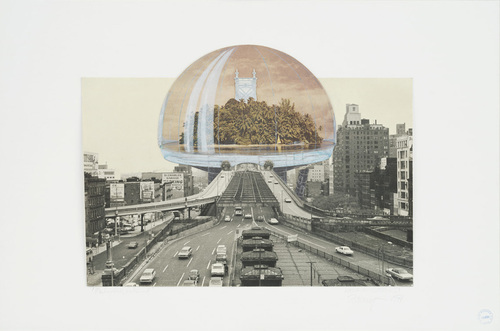
The image “Palmtree Island (Oasis) Project, New York, New York, Perspective” accompanying today’s post by Haus-Rucker-Co, Gunter Zamp Kelp, Laurids Ortner, Manfred Ortner and Kaus Pinter (1971).

09/03/2013 (12 Moons Solo Project Day 246)

12 Moons Solo Saxophone Project Day 246

Date: 09/03/2013

Instrument: Tenor saxophone

Location: My cabin at the base of Mt. Index.  Mount Index, WA

Notes:

I spent the day at my cabin; reading, practicing, and sitting inside tending to the fire were the main events of my day.  I had my dog to keep me company, and the weather was mild and the cabin warm and dry. This is a small 110 square foot, one-room cabin located at the base of Mount Index in the Central Cascades.  This was the first time I’ve been to the cabin this summer, and the space itself was so particularly calm today I felt compelled to bring to life the sound of the room as I experienced it.  The full day I didn’t run across another person.  The dominant sounds of this day were the rustling maple leaves outside the cabin and the crackling fire burning in the stove.

This recording marks my second time documenting in this space during the 12 Moons solo project.  When I practice at the cabin it’s generally in front of the fire.  There is a strong, primordial draw to watching a fire.  When I practice or perform I often shake myself out of a several minutes long deep stair into soul of a particular object.  We all do this from time to time, whether in a deep state of focus or simply meditating on a thought, but I believe we all feel a deep connection to the fireplace.  The glare has a heavy pull to it in such a small room, and my improvising today strived for a balance between my horn and the fire I was tending.  

This improvisation was developed over the course of about an hour, with careful thought as to which sounds should be introduced and how much space to leave.  The improvisation is based off of two themes, each with two sounds apiece.  Overall I felt this improvisation had a strong compositional core, with themes, space, a coda, and a feel of a slow, malleable ¾ time signature.

Theme a.

Sound 1. Sustained D Pitch 

-(Left Hand) B-A-G keys, Octave, Low B

Sound 2.  Sustained B (quarter step sharp) and C in the upper register

-(Left Hand) B-A-G keys, Low B // (Right Hand) F-E-D keys, Side C

Theme b.

Sound 1.  (This chord was also used in my improvisation from 09/01/2013 as well as my composition Willing Joy).  I used my embouchure to pull pitches in and out to maintain the ¾ feel, but the full chord used the following pitches: E, C D.

-(Left Hand) B-A keys, Octave, Low Bb, Palm D // (Right Hand) F key

Sound 2.  A (quarter step sharp) B (quarter step sharp).

-(Left Hand) B-A-G keys, Low Bb // (Right Hand) F-E keys, Side Bb

-Neil  

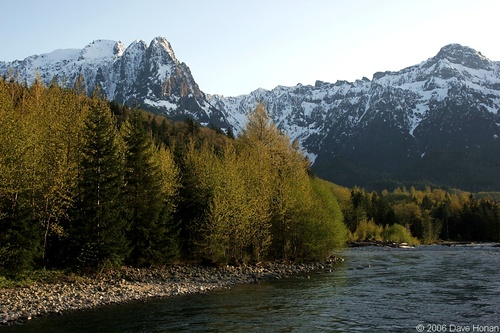
The image accompanying today’s post is the Skykomish River with Mount Index in the background.