08/25/2013 (12 Moons Solo Project Day 237)

image

12 Moons Solo Saxophone Project Day 237

Date: 08/25/2013

Instrument: Tenor saxophone

Location: Home studio in Clinton, WA (Whidbey Island)

Notes:

After a few days of working with very finite textures in both my practice and recording, I decided to develop an improvisation that balanced loose, gritty melodies amidst more controlled ones.  This is a challenge for me.  It’s often the case that I improvise more freely when doing either a very controlled piece, or one with much more reckless abandon.  The combining of the two is a technique I love to work with, and as stated, requires a very different kind of focus for a piece to come out successfully for me.  During my recording process, I improvised a series of pieces.  Some were much stronger than others in execution.  In each piece I improvised melodic cycles and some kind of more stable harmonic chord.  

This recording uses a sound world that balances two areas of pitch material.  Area 1 had an abstract, improvised series of fingerings that tended to center around the pitches (in the tenor key of Bb): 

C-Ab-Bb—-

I then continued the fingering cycle but adjusted my embouchure pressure to bring out new pitch cycles in the upper register:

F-Eb-Bb—-

The held chord occupied the sound Area 2, with the following fingering and pitches:

Pitches (in ascending order): G#, F#, C#

(Left Hand) B-A-G keys, Octave, Low B // (Right Hand) E-D keys

-Neil

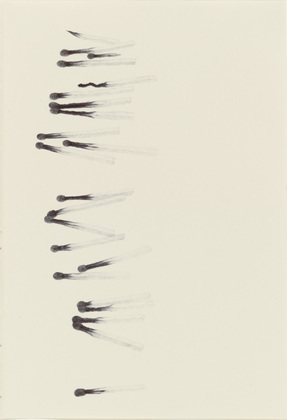
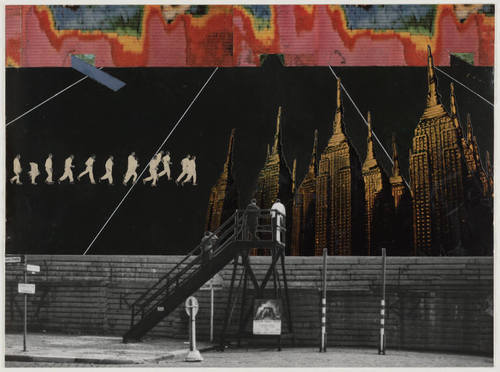
The image “Untitled from the series ‘Ten Thousand Things That Breathe” accompanying today’s post by Renato Orara (2003).
08/24/2013 (12 Moons Solo Project Day 236)

image

12 Moons Solo Saxophone Project Day 236

Date: 08/24/2013

Instrument: Tenor saxophone

Location: Home studio in Clinton, WA (Whidbey Island)

Notes:

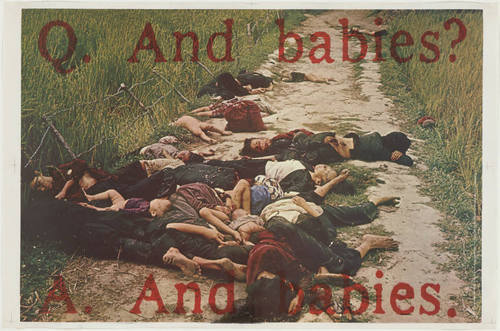
The current political conflict and civil war in Syria have been on my mind this past week.  The alleged Syrian government’s use of chemical weapons against rebel fighters outside Damascus is a horrifying prospect.  The reports, images and videos show a terrifying reality for the people of Syria.   Men, women and children, experiencing “convulsions, pinpoint pupils, blurred vision and respiratory distress.  3,600 patients displaying symptoms consistent with exposure to a neurotoxic agent.  Of those, 355 reportedly died.” (NRP.org). My improvisation today was inspired by this conflict and the current, alleged revelation of the use of this weapon by a government against it’s own people.

In this piece I used double and single tonging to create a palette of ambient sound with overtones that encompassed a wide backdrop of white noise air flow.  I wanted to bring into this piece a focus of air.  I found the use of this tonging technique to be a very direct method of achieving this.  There is limited pitch use in this piece, but what little there is, I tried to carefully introduce it.  This included slight fade in and fade outs, abrupt tiny dots of high pitches, and slight shifts from one pitch center to another.  I based the improvisation around the following fingering:

(Left Hand) B-A-G keys, Octave, Low B // (Right Hand) F-E-D keys.  I would also occasionally slightly open the Side C key or add the Low C in the right hand.

Though a grim concept, I wanted to impart a feeling of rotten-air in this piece, a sound world where we can experience through our imagination that air, the most fundamental of human rights is being taken away.

-Neil

The image “Q. And babies? A. And babies.” accompanying today’s post by the Art Workers’ Coalition.  Photograph by R.L. Haeberle (1970).

08/23/2013 (12 Moons Solo Project Day 235)

image

12 Moons Solo Saxophone Project Day 235

Date: 08/23/2013

Instrument: Tenor saxophone

Location: Home studio in Clinton, WA (Whidbey Island)

Notes:

In today’s improvisation, I used the division of range to create two sound fields.  The first, which opens the piece, is centered from the mid to altissimo register.  The second begins abruptly at :23, and centers around the low register of the horn.  My goal was to create two very strong, but diverse sound environments that were complimentary to one another, and to create a gentle, undulating spirit in the piece.  I used ornamentation in the first sound field (upper register) to create heart flutters within the repetitive cycle.  As the piece evolved I began opening and closing the low bell keys in the second sound field (the lower register).  This added additional pitch material, but also made the melody more ambiguous and less directly stated.

The first sound field used the following fingering:

(Left Hand) B-A keys, Octave, Palm Eb key, Low C // (Right Hand) F-E-D keys, Low C.  Trill the Low F constantly.

The second sound field used the follow fingerings:

Concert B and E: Standard Low C# fingering but trill the Low F key.

Concert A# and E: Standard Low C fingering but trill the Low F key.

Concert G# and E: Standard Low Bb fingering but trill the Low F key.

-Neil

The image “Exodus, or the Voluntary Prisoners of Architecture, Training the New Arrivals, project, Axonometric projection” accompanying today’s post by Rem Koolhaas, Elia Zenghelis, Madelon Vriesendorp and Zoe Zenghelis (1972).

08/22/2013 (12 Moons Solo Project Day 234)

image

12 Moons Solo Saxophone Project Day 234

Date: 08/22/2013

Instrument: Tenor saxophone

Location: Practice room A at South Whidbey High School.  Langley, WA (Whidbey Island)

Notes:

After 4 days in the wilderness with limited time to practice, I carved out time during my teaching day to buckle down and work on very concrete, finite etudes.  I ended my practice session by playing out of the standard saxophone book “25 Daily Exercises For Saxophone by H. Klose."  The pieces in this book are not particularly challenging from a technical standpoint, but require a great deal of focus on breathing, pacing and tempo.  The exercises are tonal and balance the use of linear, note-to-note playing with vertical arpeggios.  In today’s improvisation I explored the idea of balancing two extremes together, and allowed myself to be directly influenced by this book of tonal etudes.

During this piece I improvised a series of triadic chords played in a triplet feel, along with a more static drone that interrupts the triads.  I worked for some time on various takes, attempted to create a fully balanced piece with two equal parts: the tonal triplets / the chord, with a repeat.  I made it my aim to try and remember with as much precision as possible what triads I had played in the first half of the piece, and to play these again during the second half.  There is a gradual slowing of the tempo during this piece which was not intentional.  I improvised triads which included, approximately in this order (in the tenor key) Bb, D diminished, Bb, D diminished, C, G7, C, F, A minor, E7, A minor, E7, Bb.  Again, as this was improvised, there was some variation and particularly so in the attempt at repeating it.  The fingering for the more stable chord which interrupts the triads was as follows:

(Left Hand) B-A keys, Octave, Low Bb // (Right Hand) F-D keys, Low C, Side F

-Neil

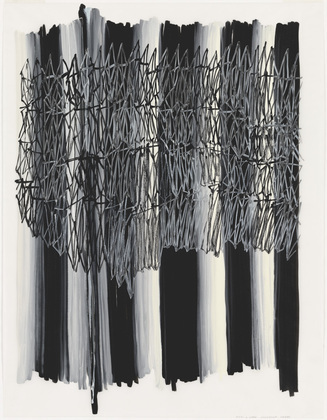
The image "Untitled” accompanying today’s post by Harvey Tulcensky (1997).

08/21/2013 (12 Moons Solo Project Day 233)

image

12 Moons Solo Saxophone Project Day 233

Date: 08/21/2013

Instrument: Soprano saxophone

Location: Beside a tributary while hiking out of the Necklace Valley.   North Cascade range in WA state.

From August 18th-21st I hiked into the Necklace Valley with my friend and fellow musician Cameron Peace.  In total, we covered approximately 30 miles of very strenuous backpacking, including well established hiking trails, game trails, rock scrambling, and short crossings over alpine glaciers.  The three recordings from August 19th-21st detailed my experiences in some of the locations we visited.

Day 3: August 21st.  Hiking out of the valley

Notes:

On the 9 mile march out of Necklace Valley, we stopped alongside a tributary to rest and eat some food.  The tributary itself flows into the East Foss River.  The raging river below us created a thicket of sound that inspired me, despite being very tired, to pull out my horn and improvise along side it.  

During this improvisation I wanted to capture both the persistent drone of the river, but also the individual punctuations of sound that occur within it.  During this piece I would stare at a boulder, old log or waterfall and try to hone in on the sound in that small bit of this river environment.  This was reflected in my improvisation, in that I would use tiny recurring melodies, and try to incorporate the drone of the river and my own “drone” within them.  My drone in this piece was firing up a deluge of sound in my horn, including high whistle tones and clusters of undulating sounds.

-Neil

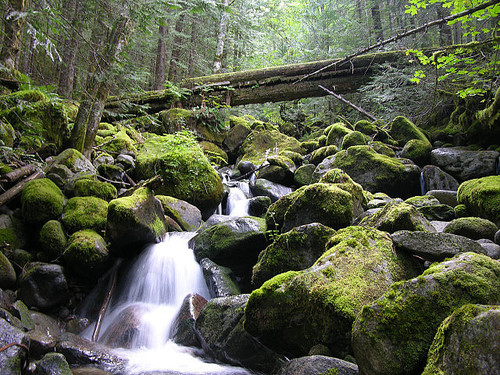
The image accompanying today’s post a tributary flowing into the East Foss River.