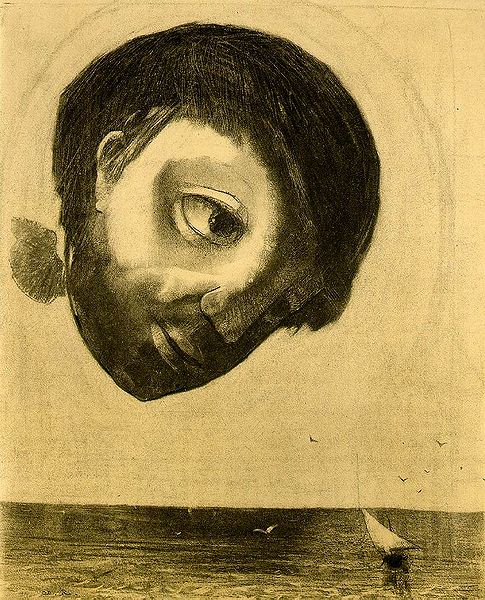
04/05/2013 (12 Moons Solo Project Day 95)

12 Moons Solo Saxophone Project Day 95

Date: 04/05/2013

Instrument: Tenor saxophone

Location: Home studio in Clinton, WA (Whidbey Island)

Notes:

With the return of Spring my spirits are feeling high, and I woke this morning feeling calm and strong.  I wanted to explore a common feeling–a sound of brotherhood that is innately in all of us.  I feel that there are specific melodies, gestures, scales and chords that are universal to all musical traditions which I qualify as “root” sounds.  To explore a root improvisation today, I worked with the most joyous of all chords, the major triad.  

From the outset of the improvisation I entered with a high level of energy and volume.  I made it my aim to maintain or build on this energy throughout the piece.  My root melodic/chord shape used the concert key pitches of F, D and Bb.  This is a Bb major chord, which overall had a downward–5-3-1 motion.  I explored the F and D for some time, including a chromatic, ornamental motion that linked the F and D before moving onto the low Bb.   I then branched off into textural exploration and occasionally returned to the root chord.

-Neil

04/04/2013 (12 Moons Solo Project Day 94)

12 Moons Solo Saxophone Project Day 94

Date: 04/04/2013

Instrument: Alto saxophone

Location: Langley Middle School band room.  Langley, WA (Whidbey High School)

Notes:

A week ago I found myself with a few minutes between sectionals at Langley Middle School.  I noticed a large, vintage looking timpani drum and I couldn’t resist playing into it.  I was amazed by the deep, lasting resonance inside this drum and particularly so compared to the other two kettle drums on either side of it.  By moving the tuning foot pedal, I created some incredible sounds inside that instrument which could bend up and down based on the direction I moved the pedal.   I decided that this morning I would make the time to work with this particular drum again.

Though I was tempted to use the foot pedal in this piece, I decided it would stretch the boundaries of this project beyond my ultimate intention.  My aim is to make this a solo project, and I believe that incorporating the resonance inside a drum is of course utilizing a second instrument.   However, there is something quite different about intentionally manipulating the sound with an additional apparatus on a secondary instrument, rather than allowing it to naturally resonate.  It feels fundamentally different to me to do this, than it would to augment my sound based upon the acoustics of a room.  The room, and in this case the timpani is a secondary instrument, but it feels like an extension of my horn rather than a separate tool.

I improvised this piece freely without any pre-concieved material.  Whole-step split tones and overtone fingerings yielded beautiful contours inside the drum.  In order to capture as much of the drum’s perspective as possible, I placed my mic setup beneath the base, so the saxophone itself was about 4 feet from the mic.  

Special note: I think this recording would be experienced the best at high volume.  

-Neil

04/03/2013 (12 Moons Solo Project Day 93)

12 Moons Solo Saxophone Project Day 93

Date: 04/03/2013

Instrument: Tenor saxophone 

Location: Home studio in Clinton, WA (Whidbey Island)

Notes:

A high F (or F# if the horn has it), is the ceiling of the saxophone’s common range.  Above this is a region called the alitssimo range, which has chromatic pitches akin to those in a lower octave, but the fingering system and embouchure technique are very different.  During my practice session I worked with the tenor note F in the altissimo range.  I decided to utilize this pitch in my improvisation today, where I explored the common pitch F in four octaves with a repetitive rhythm. 

I tried to make the rhythm in this improvisation very declarative: 1 2 3—.  Because of the limited number of notes at my disposal, I pre-determined certain criteria I wished to cover.  These included: 1.  A wide dynamic range, from very soft and controlled to very loud and almost blatty, and with abrupt transitions and smooth transitions.   2.  A variety of vibrato tempos, from gentle wavering to tighter pulses.  3.  Space.  However, the space between action seemed to be fairly static, which was not necessarily my intention at the outset.  4.  A variety of cutoff’s, including fade-outs and more abrupt stops of the air.  Overall I worked to maintain a balance between the above criteria to add a limited yet noticeable amount of variety to the improvisation.

-Neil

04/02/2013 (12 Moons Solo Project Day 92)

image

12 Moons Solo Saxophone Project

Date: 04/02/2013

Instrument: Tenor saxophone

Location: Woodland park overpass at 50th and Aurora in Seattle, WA

Notes:

My brother once lived in a house next to a freeway barrier off of I-5 and would sit outside and pretend that a river was flowing on the other side of the concrete wall.  Living in a rural place these past several months has made me appreciate the distinctive, ambient noise of traffic.  This improvisation was recorded about an hour after the peak volume of traffic had passed over highway 99 just South of downtown Seattle.  My improvisation was a response to the dwindling traffic on a Tuesday evening.

I used a base fingering in this piece which was as follows: (Left Hand) B-A-G, Octave, Palm Eb to Palm F.  By moving from the Palm Eb and then adding the Palm F, a wonderful, fluttering tone cluster emerged.  I would interrupt the serenity of this sound by playing a middle octave Concert Ab and low octave Concert Ab while opening and closing the F-E-D keys in the right hand.  Just as the base fingering in this piece had a natural fluttering sound all its own, I artificially created a fluttering sound on the Ab pitches.

-Neil

The image “Lightscape/Night Sky” at Great Basin National Park accompanying today’s post courtesy of the National Park Service.  

04/01/2013 (12 Moons Solo Project Day 91)

12 Moons Solo Saxophone Project Day 91

Date: 04/01/2013

Instrument: Tenor saxophone

Location: Home studio in Clinton, WA (Whidbey Island)

Notes:

On recommendation from my brother, I’m currently reading a book about the Memory Palace technique, which is a mnemonic device used to remember virtually any strain of information.  This is a fascinating idea, and as part of this process I’ve decided to spend time surveying areas of my playing which I know to be weak, in order to identify new methods of progress.  Today I practiced with 10 note groupings at varying tempos, and tried to string together the same 10 notes with different mental interpretations each time.  For example, I would slur (play smoothly) all 10 notes, but in my mind beam the notes in groups of 4, 4 and 2 (10 total).  Then on the second repetition I would “beam” them in groups of 4, 2, 4, than 2, 4, 4.  I then went into odd note grouping–3, 2, 5 etc.  Though the figure itself audibly sounded the same, I tried to change my perspective to see if it could warrant any improvement.  

In my improvisation today, I decided to try and sonically capture a balance between process in my mind and the reality coming out of my instrument.  I used a common starting fingering: (Left Hand) B-A-G, Low B // (Right Hand) F-E-D, and by opening and closing my first finger B key, side Bb, and the Low F key, I created a cyclical pattern.  This pattern was as follows: 1-2-3-4 // 5-6 // 7-8-9-10 (10 total beats).  There were some mistakes during this improvisation, but for the most part I maintained this pattern with accuracy.  The figure is played in different octaves with different pitches during this improvisation, though again, the fingering system remained the same.  The pattern does show itself when certain octaves are played, but at other times, depending on the octave, the pattern seems to be blurred altogether.  To create some division in the piece, I would occasionally play a “role” by breaking the pattern.  This resulted in the rapid, trilled sounds captured at times.  

-Neil

The image accompanying todays post by printmaker and pen and ink artist Alfred Kubin (1877-1959).